
High-Strength Rebar Supplier in Brooklyn, NY
High-Strength Rebar Supplier in Brooklyn, NY
Behind every strong concrete structure, there’s rebar holding it together. Whether you’re a contractor sourcing material for a large-scale build or a DIYer tackling a backyard project, rebar is essential for ensuring the integrity and longevity of your concrete structures. As a rebar supplier serving Brooklyn and New York City, Eastern Steel Corporation offers rebar in multiple sizes, types, and coatings to meet any project requirement. Contact us today to learn more about our products and services.
What Is Rebar?
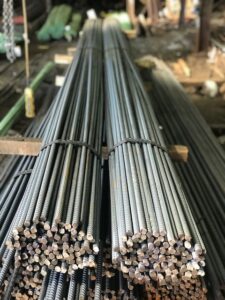
Rebar is a steel or composite rod embedded in concrete to add tensile strength. On its own, concrete handles compression well but cracks easily under tension. Rebar solves this problem. Bonding with the concrete as it cures, rebar resists the pulling and bending forces that would otherwise cause structural failure.
Rebar is used in virtually every major structure, including foundations, columns, beams, slabs, bridges, and retaining walls. Without it, modern construction wouldn’t be possible.
Rebar Specifications
Rebar is classified using a standardized numbering system based on diameter. In the United States, rebar sizing follows ASTM standards, where the number represents the bar’s diameter in eighths of an inch. So a #4 bar has a diameter of 4/8″ (or 0.5″). Here’s a simplified rebar size chart to get you oriented:
| Bar Size | Diameter (in) | Weight (lb/ft) |
|---|---|---|
| Bar Size#3 | Diameter (in)0.375" | Weight (lb/ft)0.376 |
| Bar Size#4 | Diameter (in)0.500" | Weight (lb/ft)0.668 |
| Bar Size#5 | Diameter (in)0.625" | Weight (lb/ft)1.043 |
| Bar Size#6 | Diameter (in)0.750" | Weight (lb/ft)1.502 |
| Bar Size#7 | Diameter (in)0.875" | Weight (lb/ft)2.044 |
| Bar Size#8 | Diameter (in)1.000" | Weight (lb/ft)2.670 |
Rebar Types Explained: What to Know Before You Buy
Not all rebar is the same, and choosing the wrong type can lead to structural issues or unnecessary costs. The right type for your project will depend on a combination of factors, including the surrounding environment, your available budget, and the structural requirements outlined in your plans. Types of rebar include:
- Fiberglass Rebar – Fiberglass rebar, also called glass fiber reinforced polymer (GFRP) rebar, is a non-metallic alternative that offers excellent corrosion resistance, lighter weight, and high tensile strength. It doesn’t conduct electricity or interfere with magnetic fields, making it ideal for marine structures, MRI facilities, and corrosive environments.
- Stainless Steel Rebar – Stainless steel is the highest-performing option for corrosion resistance, but also the most expensive. It’s typically reserved for critical infrastructure projects where long-term durability outweighs upfront cost.
- Galvanized Rebar – Galvanized rebar is steel rebar coated in zinc for corrosion protection. It’s less expensive than stainless steel and offers better durability than standard epoxy-coated options.
- Carbon Steel Rebar – The most widely used type in construction. Carbon steel rebar offers high tensile strength and bonds reliably with concrete. It’s the standard choice for most commercial projects.
- Epoxy-Coated Rebar – Epoxy rebar is identical in structure to carbon steel but is coated with a green epoxy layer that resists corrosion. This type is particularly valuable in the Northeast, where coastal humidity and road salt can accelerate rust in exposed or underground structures.
What Are the Advantages of Rebar?
Rebar offers a range of important structural and economic benefits that make it a go-to choice for construction projects of all sizes and complexities. Advantages include:
- Tensile Strength – Rebar dramatically increases concrete’s ability to withstand pulling and bending forces, extending the life of structures.
- Crack Prevention – By distributing stress across the structure, rebar minimizes cracking caused by temperature changes, settling, and load shifts.
- Cost Efficiency – Reinforced concrete is far more affordable than alternative structural materials such as solid steel or timber at scale.
- Versatility – From residential slabs to highway bridges, rebar adapts to nearly any construction application.
- Customization – With multiple sizes, coatings, and materials available, rebar can be specified to match almost any environmental condition or load requirement.
Key Applications of Rebar in Construction
Concrete rebar is used across a wide range of construction projects. In New York City specifically, you’ll find it in:
- Foundation Work – Commercial foundations rely heavily on #4 and #5 rebar to resist soil pressure and seismic activity.
- Retaining Walls – Retaining walls are especially relevant in Brooklyn’s hillier neighborhoods, such as Prospect Heights and Carroll Gardens, where soil retention is critical.
- Driveways and Slabs – Poured concrete driveways and outdoor slabs use #3 or #4 rebar in a grid pattern to prevent cracking under load.
- Structural Columns and Beams – Larger bar sizes (#6–#8) appear in high-load commercial applications.
- Marine and Waterfront Structures – With Brooklyn’s waterfront development booming, corrosion-resistant options such as fiberglass rebar and epoxy-coated bars are in growing demand.
Frequently Asked Questions
For most concrete slabs, #3 or #4 rebar is standard, spaced in a grid pattern roughly 12–18 inches apart. The correct size depends on the slab thickness, expected load, and soil conditions. Always consult a structural engineer for load-bearing applications.
Plain rebar is untreated carbon steel, which is strong, affordable, and suitable for most interior applications. Epoxy-coated rebar has a protective green coating that resists corrosion, making it the better choice for structures exposed to moisture, saltwater, or de-icing chemicals.
The best tool depends on the scale of your project. For thin bars, manual rebar cutters or bolt cutters work well. For larger-diameter bars, a heavy-duty electric or hydraulic rebar-cutting tool is highly recommended to ensure clean, precise, and effortless cuts.
If you’re wondering how to cut rebar on-site, always start by wearing proper personal protective equipment (PPE), including safety goggles and heavy gloves. Secure the bar firmly, mark your measurement, and use an angle grinder with a metal-cutting wheel or a portable rebar cutter to slice through the steel. Avoid overheating the metal, as this can weaken its structural integrity. We also offer metal cutting services for your project.
Fiberglass rebar (GFRP) is used in applications where corrosion resistance is a priority, such as marine structures, chemical plants, bridge decks, and medical facilities that require non-conductive, non-magnetic reinforcement. It’s lighter than steel rebar and won’t rust, though it typically costs more upfront.
Get Your Project Off to a Strong Start With the Right Rebar
Rebar is the backbone of concrete construction, and getting the specification right from the start saves money, time, and structural headaches down the road. Use the rebar size table above as your starting point for rebar dimensions, match the bar type to your environmental conditions, and source from a reliable local supplier.
For New York contractors and builders, the Eastern Steel Corporation offers a stocked inventory of plain and epoxy-coated rebar, with delivery and custom cutting available. Contact us today for a quote and get your next project off the ground.
Get Product Pricing Now
Product pricing changes daily due to raw material costs. Ask about our delivery and custom cutting!