
Why Precision Matters in Metal and Steel Fabrication
Every project manager, structural engineer, and procurement officer in New York City knows the reality of a tight job site. When structural steel arrives on-site, it needs to be exactly right. Field modifications cost time and money that no budget can afford.
As a dedicated steel distribution company serving the region since 1924, Eastern Steel Corporation looks at precision from a logistical perspective. We focus on sourcing and distributing a massive inventory of mill-certified structural steel and sheet products. We make sure the foundational materials your fabricators rely on match your exact mechanical and dimensional constraints.
Let’s look at why precision is so critical throughout the supply chain, how tight tolerances keep your projects moving, and what happens when material accuracy falls short.
What Is Metal Fabrication?
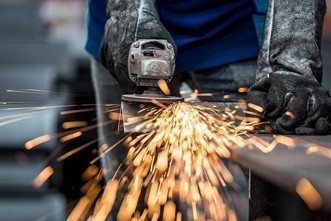
Metal fabrication encompasses the cutting, forming, shaping, and processing of metal products to meet specific project or application requirements. The particular process depends on the material, dimensions, geometry, and tolerances involved. Common processing methods include:
- Saw cutting
- Shearing
- Laser cutting
- Waterjet cutting
- Plasma and gas cutting
- Plate burning
- Beveling and chamfering
- Drilling
- Cambering
- Tapping and countersinking
Why Precision Is Essential in Metal and Steel Fabrication
In heavy commercial construction and infrastructure development, precision prevents structural failure. When dealing with metal and steel fabrication, small deviations scale up rapidly. Even a fraction of an inch off-spec at the supply level can cause misalignment issues.
For builders in dense urban environments like Brooklyn or Manhattan, field modifications are prohibitively expensive and logistically restrictive. Sourcing materials that adhere strictly to ASTM standards ensures that when your fabrication partners cut, weld, or punch the steel, the resulting sub-assemblies fit perfectly on-site. Precision guarantees structural load-bearing reliability, legal compliance with NYC building codes, and structural longevity.
Understanding Precision Sheet Metal Fabrication
Sheet metal fabrication refers to processing sheet metal into specific sizes, shapes, or configurations for a particular application. Precision sheet metal fabrication takes that idea a step further by focusing closely on the dimensions and specifications required for the finished material.
Depending on the project, sheet metal may need to be cut, sheared, formed, drilled, or processed in another way. The material thickness and the dimensions of the finished piece both matter, but so can details such as hole placement, edge dimensions, angles, and cut geometry. For example, shearing can be used to create straight cuts in sheet and plate material. Other projects may call for laser cutting or waterjet cutting when the specifications require a different approach. The point is not that one processing method is always better than another. It is about using the appropriate method for the material and the requirements of the job.
The Role of Tolerances in Fabrication
If you regularly work with drawings and specifications, you already know that a stated dimension does not always mean the finished piece has to measure that exact number down to the last fraction.
A tolerance establishes the acceptable amount of variation from a specified dimension. The appropriate tolerance depends on the application and the requirements of the project. Some applications can accommodate a little more variation. Others require much tighter dimensional control because components need to fit together closely. When you are ordering processed steel or sheet metal, having clear dimensions and specifications makes it easier for your distributor to understand exactly what you need.
Industries That Rely on Precision Metal Fabrication
High-accuracy materials serve as the backbone for several demanding sectors across the New York metropolitan area:
- Commercial Construction: High-rise structures depend on perfect column-to-beam connections to distribute loads safely.
- Infrastructure & Public Works: Bridge frameworks, transit stations, and marine piling require absolute compliance with strict engineering metrics.
- HVAC & Mechanical Contractors: Large-scale commercial ventilation and air distribution networks require exact sheet metal geometries to optimize efficiency.
- Aerospace & Manufacturing: Equipment operating under high stress leaves no room for dimensional variance.
Common Consequences of Poor Fabrication Accuracy
When material specifications fail to meet project requirements, the financial and operational fallout adds up quickly:
- Structural Compromise: Poorly fitting joints distribute load stresses incorrectly, threatening structural safety.
- Inflated Field Labor Costs: Fixing dimensional errors on an active NYC job site requires emergency labor, specialized equipment, and extra field welding.
- Extensive Material Waste: Out-of-tolerance steel sections often cannot be safely reworked, leading to expensive scrap and re-ordering delays.
- Project Schedule Delays: Downstream trades get pushed back when structural components are sent back for reprocessing.
Choosing the Right Metal Fabrication Partner
Securing high-accuracy results begins long before a fabricator starts up their equipment. It starts with your material supply. Builders need a distribution partner capable of delivering certified, reliably consistent steel that meets the exact technical criteria of the project.
At Eastern Steel Corporation, we have spent over a century acting as a trusted steel distributor for builders throughout New York City, Westchester County, and Long Island. Contact us today to discuss your project requirements and explore our extensive on-site inventory.
Four Rust-Resistant Metals Built for Demanding Environments
Corrosion can ruin structural integrity, destroy aesthetics, and drive up replacement…
Choosing between carbon steel and stainless steel can make or break your project’s budget and lifespan. While they look similar, their performance,…