
Understanding the Key Differences Between Carbon and Stainless Steel
Choosing between carbon steel and stainless steel can make or break your project’s budget and lifespan. While they look similar, their performance, strength, and rust resistance are completely different.
For contractors and fabricators, making the right choice upfront avoids costly failures later on. Eastern Steel Corporation has supplied the NY metro area since 1924. Here is a direct breakdown to help you understand the difference between stainless steel and carbon steel so you can choose the right metal for the job.
What Is Carbon Steel?
Carbon steel is a steel alloy made primarily from iron and carbon. Unlike stainless steel, it does not contain enough chromium to provide significant inherent corrosion resistance. Its carbon content can vary, and that variation affects properties such as hardness, strength, ductility, and machinability. Carbon steel is commonly classified as low-, medium-, or high-carbon steel:
- Low-Carbon Steel: Contains relatively little carbon and is generally easier to form, machine, weld, and fabricate.
- Medium-Carbon Steel: Provides a balance of strength and ductility and is often used where greater mechanical performance is required.
- High-Carbon Steel: Offers increased hardness and strength but is generally less ductile and more challenging to fabricate.
What Is Stainless Steel?
Stainless steel is an iron alloy that must contain at least 10.5% chromium. When this chromium reacts with oxygen in the air, it naturally forms a microscopic, self-healing protective layer on the surface. Other elements like nickel and molybdenum are often added to boost strength and temperature resistance.
What Is the Difference Between Stainless Steel and Carbon Steel?
The fundamental difference between carbon steel and stainless steel lies in their chemical makeup, which directly dictates how they behave in real-world conditions.
The presence of chromium in stainless steel creates a highly corrosion-resistant barrier. Conversely, carbon steel lacks this chromium protective shield. Without it, the iron in carbon steel easily bonds with oxygen and moisture, leading to the formation of rust. Because of these distinct formulations, the stainless steel melting point typically ranges between 2,550°F and 2,750°F (depending on the grade), while carbon steel generally melts between 2,500°F and 2,800°F.
How to Tell the Difference Between Carbon Steel and Stainless Steel
If you are looking at two unmarked pieces of metal in a warehouse, knowing how to tell the difference between carbon steel and stainless steel is a valuable skill. Here are the most reliable methods:
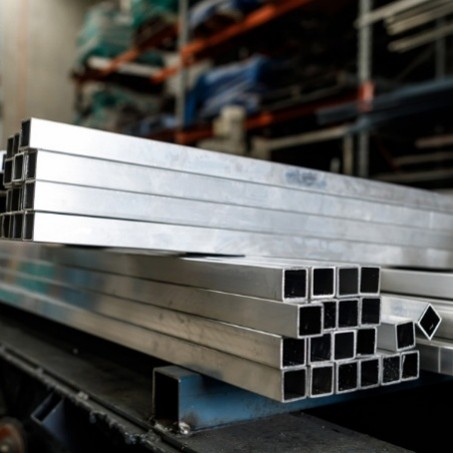
- Look at the Finish: Carbon steel is usually dull and matte, and it might already have a little surface rust. Stainless steel has that bright, silvery, clean reflection.
- Grab a Magnet: Carbon steel is always strongly magnetic. Most common stainless steels (like the 304 or 316 grades used in most industries) won’t stick to a magnet at all, or will only have a very weak pull.
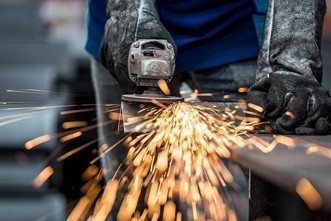
- Check the Sparks: If you take a grinder to them, carbon steel throws off a huge shower of bright, long, exploding sparks. Stainless steel throws off fewer, shorter, duller sparks.
Corrosion Resistance: Which Material Performs Better?
When comparing the difference between carbon steel and stainless steel under environmental stress, stainless steel wins easily. Its self-healing surface defends against rain, salt water, and harsh chemicals without degrading.
Carbon steel will rust quickly if exposed to moisture. Surviving outdoors requires secondary surface treatments like painting, powder coating, or galvanizing (zinc coating). If that surface coating gets scratched, the underlying metal will corrode.
Strength and Performance Comparison
While stainless steel wins on rust prevention, carbon steel excels in raw hardness and mechanical strength.
High-carbon steel can be heat-treated to resist severe wear and heavy loads, though it is more prone to cracking under sudden impacts. Stainless steel provides better ductility (flexibility) and maintains its structural integrity across extreme freezing or high-temperature environments.
Which Is Better for Your Application?
Base your decision on these core project requirements:
- Choose Carbon Steel If: You are working on a tight budget, the metal will remain indoors or protected, or you need maximum structural rigidity for load-bearing frames.
- Choose Stainless Steel If: The application faces outdoor elements or water, visual aesthetics matter, or you must meet strict hygiene rules (like food or medical processing).
Industries That Commonly Use Carbon and Stainless Steel
Both metals drive industrial production but serve different fields:
- Carbon Steel: Standard for structural construction (skyscrapers, bridges), automotive manufacturing, pipelines, and heavy machinery.
- Stainless Steel: Standard for commercial kitchens, food and beverage processing, pharmaceutical labs, medical equipment, and marine hardware.
Choosing the Right Steel for Long-Term Performance
Selecting the right material prevents premature product failure and high maintenance costs. Getting the right advice about the difference between stainless steel and carbon steel and securing fast sourcing matters just as much as the steel type itself.
At Eastern Steel Corporation, we’ve supplied Manhattan, Brooklyn, Queens, the Bronx, Staten Island, Long Island, and Westchester County since 1924. Contact us today to check our inventory and get a fast quote.
Every project manager, structural engineer, and procurement officer in New York City knows the reality of a tight job site. When structural steel…
Four Rust-Resistant Metals Built for Demanding Environments
Corrosion can ruin structural integrity, destroy aesthetics, and drive up replacement…